By Dr. Kiran Yadav — MBBS, DGO, DNB (Obstetrics & Gynaecology), Senior Consultant, Motherhood Hospital, Sector 57, Gurugram, and Arogyam Care Clinic, Sector 51, Gurugram. This article is for health education and does not replace a consultation with a qualified gynaecologist.
Quick answer
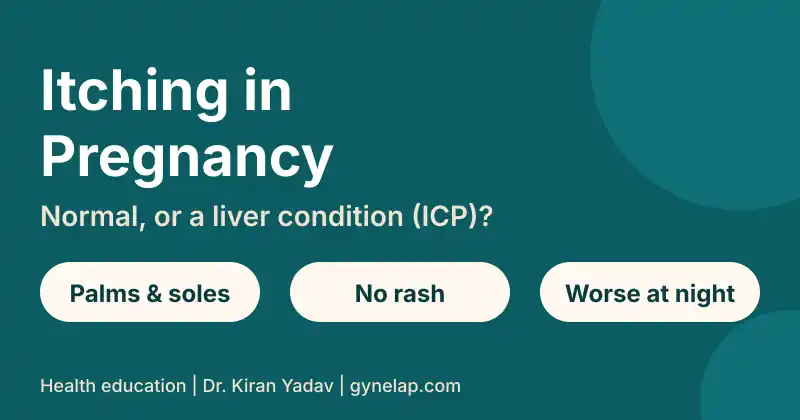
A little itching is common in pregnancy. But itchy palms and soles, with no rash and worse at night, can be a sign of cholestasis of pregnancy (ICP), a liver condition. A simple blood test checks for it. Tell your doctor or midwife promptly.
Is Itching in Pregnancy Normal?
Itchy Palms and Soles in Pregnancy: When to Think of ICP
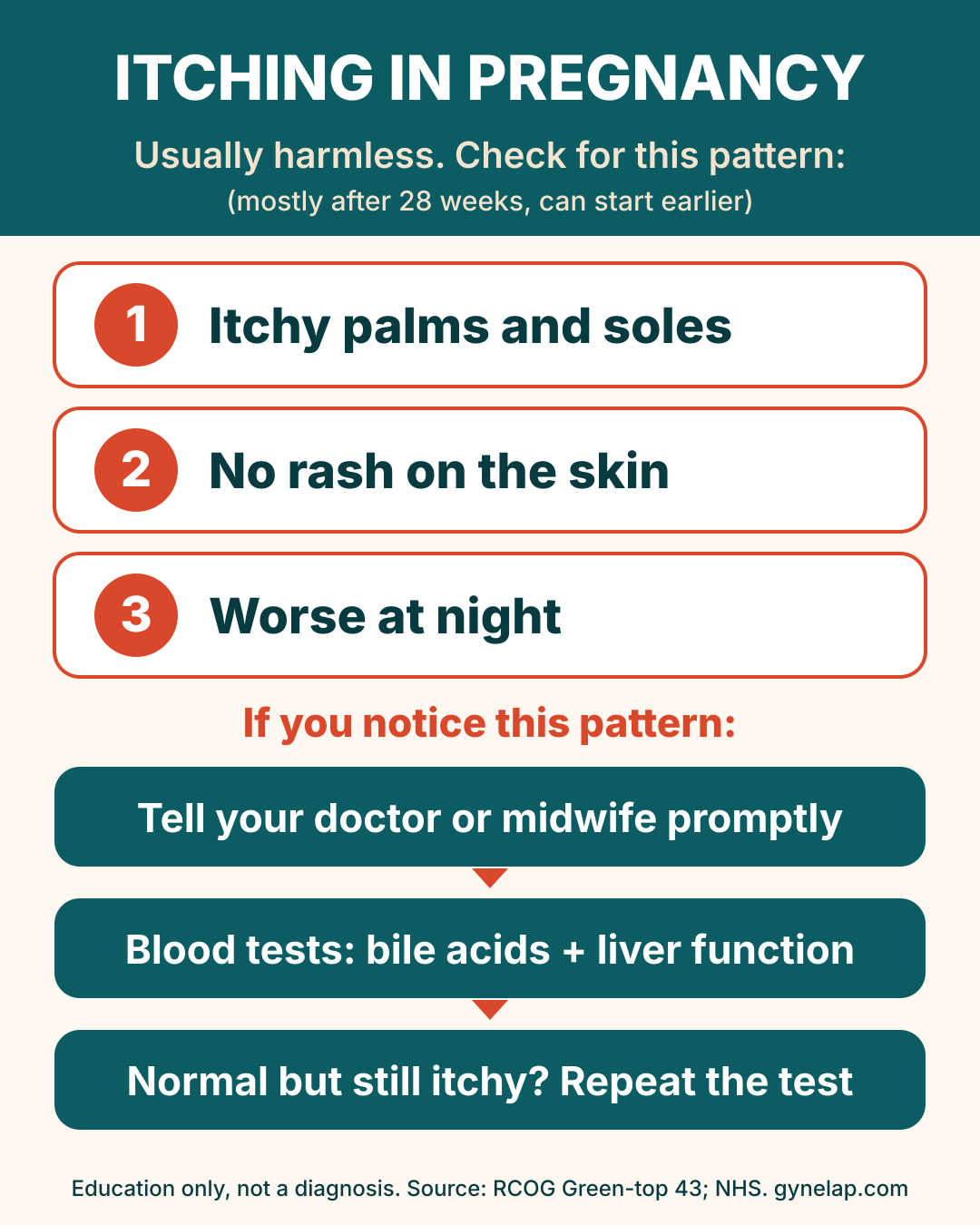
Watch for this pattern:
- Itching on the palms and soles (it can spread anywhere)
- No rash, only scratch marks
- Worse at night, spoiling your sleep
- Usually after 28 weeks, sometimes earlier [3]
Some women also notice dark urine, pale stools, yellow eyes or pain under the right ribs. Many have only the itching.
What Is Cholestasis of Pregnancy (ICP)?
ICP, also called obstetric cholestasis (or IHCP, intrahepatic cholestasis of pregnancy), happens when bile acids build up in your blood. The cause is not fully known. Hormones, genes and environment all play a part, and nothing you ate or did causes it [1]. It is more likely if you had it before, if it runs in your family, or if you are carrying twins. It is not rare in India [8].
How Is ICP Diagnosed?
With a blood test for bile acids and liver function. If the result is normal but the itching continues, ask for a repeat, because levels can rise later [1][2]. Pain under the right ribs, a severe headache or vision changes need separate checking, as they can be signs of preeclampsia.
Can ICP Harm My Baby?
What Is the Treatment?
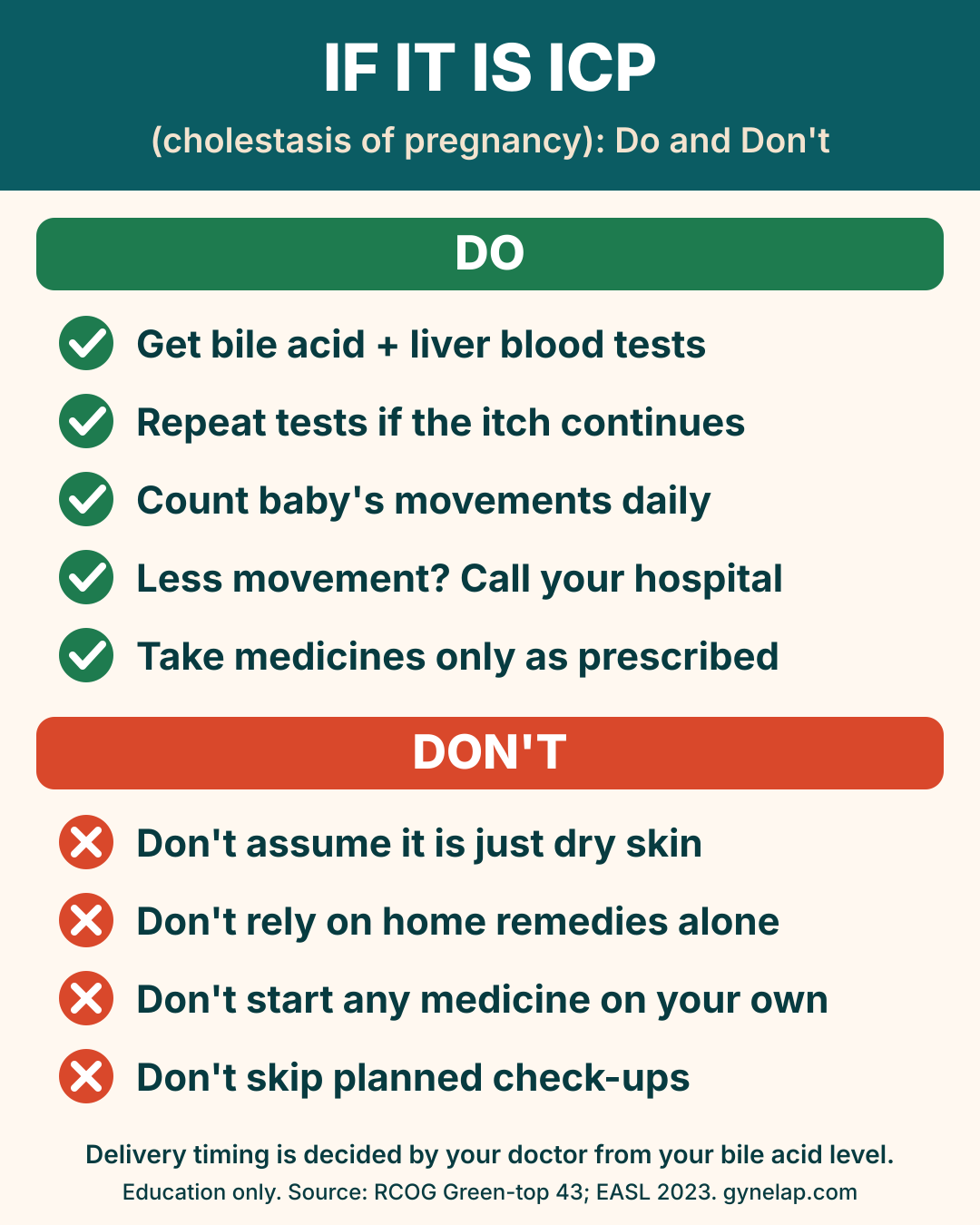
Your doctor will plan regular blood tests and baby monitoring, as for any high-risk pregnancy.
- Medicine: ursodeoxycholic acid may ease the itch. Whether it protects the baby is debated, and guidelines differ [4][5][1]. Take it only if prescribed.
- Delivery: planned birth before the due date is often considered, depending on your bile acid level. Your doctor will advise induction or caesarean section [1][9].
- At home: cool showers, cotton clothes and moisturiser ease the itch but do not treat ICP [2][3].
After Delivery
The itching usually settles within days. Liver tests are rechecked at about 6 weeks. ICP can come back in a later pregnancy, so mention it early [3].
Take-home message: Itchy palms or soles in the last months of pregnancy, with no rash and worse at night, deserve a blood test. Do not put it down to dry skin. Tell your doctor or midwife promptly. If the first test is normal and the itching continues, repeat it. If your baby moves less than usual, contact your hospital promptly [6].
Frequently Asked Questions
Why is itching worse at night in pregnancy?
ICP itching is typically worse at night. [2]
Is IHCP the same as ICP?
Yes. Both mean intrahepatic cholestasis of pregnancy, also called obstetric cholestasis.
Can ICP start early in pregnancy?
Does any home remedy or diet treat ICP?
Home measures can soothe the skin but cannot treat ICP. See your doctor. [3]
Can ICP be prevented?
There is no known way to prevent it. Early testing and monitoring are the aim. [10]
Is ICP harmful to me?
The main concern is the baby. The itch can badly disturb sleep, and the liver usually recovers after birth. [3]
Will it come back?
The chance is higher in later pregnancies, so tell your doctor early. [3]
Related Reading
References
- RCOG Green-top Guideline No. 43, Intrahepatic cholestasis of pregnancy. BJOG. 2022. Link
- NHS. Itching and intrahepatic cholestasis of pregnancy. Link
- RCOG patient information. Intrahepatic cholestasis of pregnancy. Link
- Chappell LC, et al. PITCHES trial. Lancet. 2019. Link
- EASL Clinical Practice Guidelines on liver diseases in pregnancy. J Hepatol. 2023. Link
- RCOG Green-top Guideline No. 57, Reduced fetal movements. 2026. Link
- Barcelona Fetal Medicine. Protocol: intrahepatic cholestasis of pregnancy. 2024. Link
- Arora S, et al. Maternal and fetal outcome in intrahepatic cholestasis of pregnancy at a tertiary care institute of North India. Indian J Med Sci. Link
- SOGC Clinical Practice Guideline No. 452. Intrahepatic cholestasis of pregnancy. 2024. Link
- Mayo Clinic. Cholestasis of pregnancy: diagnosis and treatment. Link
Last reviewed: November 2026. This article is for general health education and does not replace a consultation with a qualified gynaecologist.
Dr. Kiran Yadav — MBBS, DGO, DNB (Obstetrics & Gynaecology), Senior Consultant, Motherhood Hospital, Sector 57, Gurugram, and Arogyam Care Clinic, Sector 51, Gurugram.
Motherhood Hospital, Sector 57, Gurugram | Arogyam Care Clinic, G21-22, Ocus Quantum, Sector 51, Gurugram 122003.
Phone: 8860218789 | gynelap.com